


April Fools' Day may come and go with its jokes and hoaxes, but the real danger persists beyond April 1.
Cybercriminals don't take breaks and use the busy spring season to launch some of their most effective attacks.
During this hectic time, even the smartest employees can overlook subtle, deceptive scams that blend seamlessly into everyday tasks—only revealing their threat once it's too late.
Below are three current scams targeting vigilant, hardworking staff members just trying to manage their workloads.
As you read, consider this: Would everyone on your team take a moment to spot these scams?
Scam #1: Fake Toll or Parking Fee Text Alerts
An employee receives a text:
"You have an unpaid toll balance of $6.99. Pay within 12 hours to avoid late fees."
It references a legitimate toll system like E-ZPass, SunPass, or FasTrak depending on the state, with a small fee that doesn't raise suspicion. In between meetings, they click the link and pay quickly.
But the link is a trap.
In 2024, the FBI logged over 60,000 reports of fake toll messages, with scammers creating tens of thousands of phony domains to impersonate real toll authorities. Some scams even target states without toll roads.
The scam's success lies in its believable amount and plausible context; many have recently used tolls or parking, making the message seem genuine.
The best protection: Real toll agencies never request immediate payment via text message links. Train employees to always verify unexpected payment requests by directly visiting official websites or apps. Never respond to suspicious texts—even texting "STOP" can verify your number to scammers.
Remember: Convenience is the lure; following strict procedures is the shield.
Scam #2: 'Your File Is Ready' Phishing Emails
This scam mimics routine work communications.
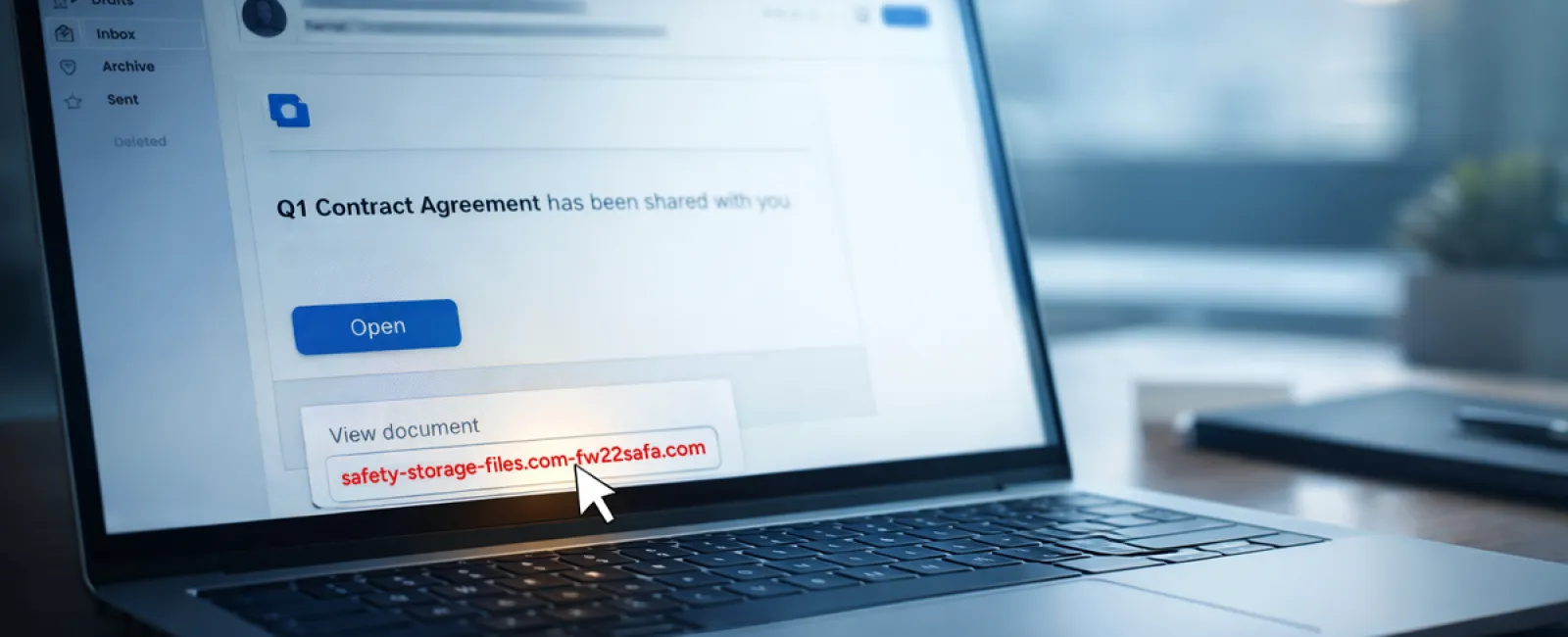
Employees get emails claiming a document was shared—often a contract on DocuSign, a sheet in OneDrive, or a file on Google Drive.
The sender's name appears authentic, and the formatting mirrors genuine notifications.
Without suspicion, they click, log in using their work credentials, unknowingly handing access to attackers who then infiltrate your company's cloud systems.
Phishing attacks leveraging trusted platforms have skyrocketed by 67% in 2025, with Google Slides phishing links alone surging over 200% in just six months.
Employees are seven times more prone to click links in these familiar platform notifications than in random emails because they appear legitimate.
Even more insidious, attackers now use compromised accounts to send these notifications, which come from legitimate servers, bypassing spam filters.
The most effective defense: Train your team not to click unexpected file-share email links. Instead, they should log in directly to the platform to confirm file presence. Additionally, IT teams can swiftly enable external sharing restrictions and monitor for unusual login patterns—settings adjustable in minutes.
Simple habits secure your company.
Scam #3: Sophisticated, Convincing Phishing Emails
Phishing emails no longer look amateurish or suspicious.
A 2025 study revealed AI-generated phishing emails have a 54% click rate—over four times higher than traditional phishing emails at 12%.
These messages reference real company names, actual job titles, and authentic workflows compiled rapidly from LinkedIn and company websites.
Targeted impersonation now focuses on departments: HR and payroll receive false employee verification requests while finance encounters fake vendor payment changes. Vendor impersonation emails alone engage 72% of recipients—90% more than other phishing types.
The emails are professional, calm, and urgent but not alarmist, blending seamlessly into everyday communications.
How to stay safe: Verify all requests related to credentials, payment information, or sensitive data through a second channel—such as a call, chat, or face-to-face confirmation. Encourage the team to hover over email addresses to check domains before clicking links and view urgency as a red flag.
True security relies on vigilance, not panic.
The Bottom Line
All these scams depend on familiarity, authority, timely pressure, and the assumption that tasks will only take seconds.
The real risk isn't careless employees but systems that expect flawless decisions under stress.
When one hurried click can disrupt your operations, the problem lies in your processes—not your people.
And the good news? Process improvements can be implemented.
How We Can Assist
Most business owners prefer not to manage extensive security training or become the go-to for identifying threats.
They want confidence that their organization isn't vulnerable without extra hassle.
If you're concerned about your team's security or know another business owner who should be, let's connect.
Schedule a straightforward discovery call to discuss:
- Current cybersecurity risks affecting businesses like yours
- How threats infiltrate routine workflows
- Practical strategies to reduce risk without slowing productivity
No pressure, no fear tactics—just honest conversation and clear options.
Click here or give us a call at 281-402-2620 to schedule your free 15-Minute Discovery Call.
If this doesn't apply to you, please share it with someone who might benefit. Often, awareness turns a "near miss" into a blocked threat.


