


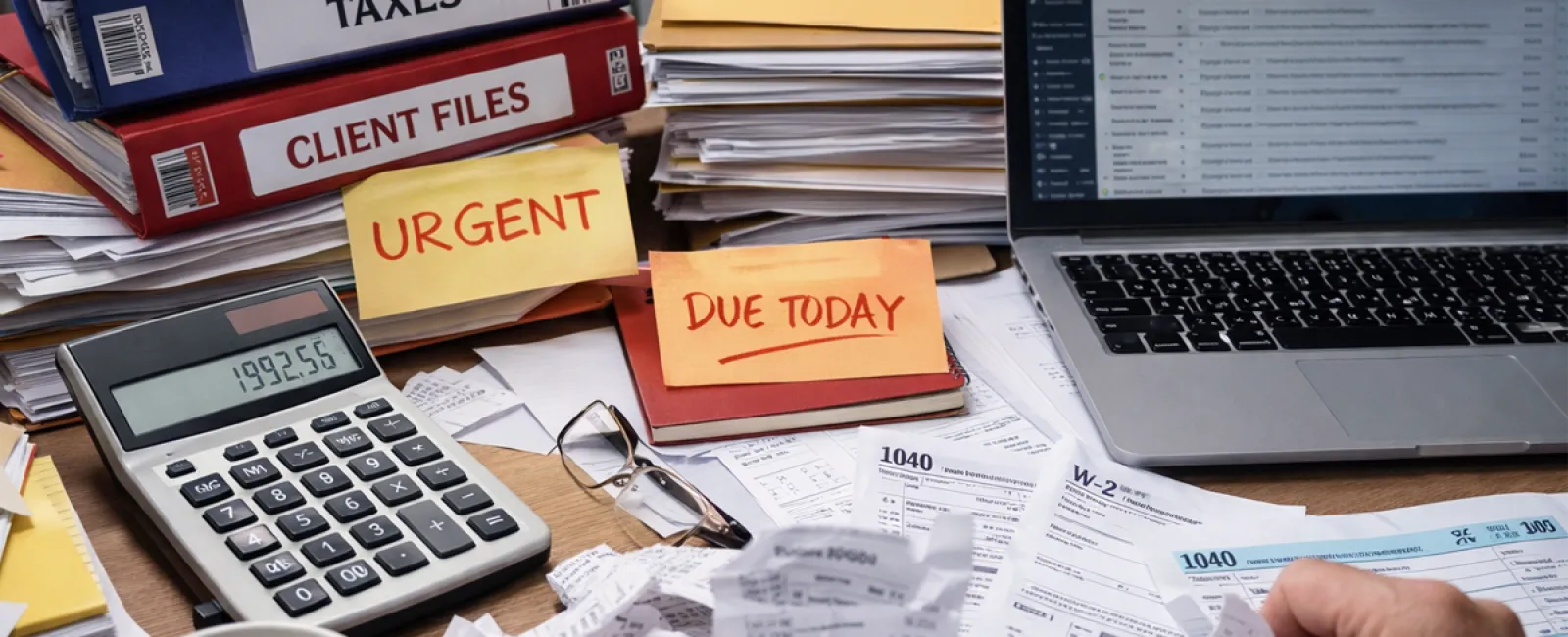
It's March — the peak of tax season.
Your accountant is swamped. Your bookkeeper is overwhelmed. Deadlines are closing in fast, and emails are flooding inboxes at an unstoppable pace.
Everyone is heads-down, hustling to get through this demanding month.
This hectic reality isn't news to you.
But it's no secret to cybercriminals either.
Security experts report a dramatic surge in phishing attacks during tax season, with March seeing about a 28% rise in tax-related scam emails compared to quieter times. These scams are subtle, crafted to blend seamlessly with everyday business emails just when your team is at its busiest.
This isn't accidental.
It's strategic timing.
Let's explore what threats you face and four straightforward strategies to protect your business from becoming an easy mark.
Stress Amplifies Supply Chain Risks
What many overlook is this:
Hackers don't only focus on accounting departments.
They exploit the chaos surrounding the busiest season.
During tax season:
- Clients hurriedly send sensitive documents.
- Staff cut corners on verification to keep pace.
- Casual requests like "Just send me the file" replace careful protocols.
- Checks and confirmations get skipped under pressure.
Everything speeds up.
And speed breeds mistakes.
Cybercriminals target busy, rushed organizations — not composed, cautious ones.
March is a prime hunting ground.
Typical Faces of These Attacks
This isn't fiction.
These phishing emails mimic everyday communications perfectly.
- Email from "your accountant" requesting a resend of W-2s due to a missing file.
- Message from a vendor claiming updated bank details needing immediate attention.
- DocuSign request for tax paperwork requiring "your signature today."
- Urgent email from "your CEO" traveling and urgently seeking assistance.
None of these raise alarms at first glance.
They look like routine business as usual in March.
That's why these scams succeed.
Why Busy Teams Fall Victim
This isn't about negligence.
It's simply human nature.
When overwhelm hits and inboxes overflow, people skim rather than read deeply. They make assumptions and react quickly.
Scammers exploit this behavior.
Their emails are engineered for rushed eyes to miss subtle red flags. They don't rely on you being careless — just busy.
And March means almost everyone is busy.
Four Simple Steps to Shield Your Business
Fortunately, you don't need complex software or an IT army to stay safe.
Adopting a few mindful practices during peak season can dramatically reduce risk.
1. Confirm payment info by phone
Never respond directly to emails stating vendor bank details have changed.
Instead, call a verified contact number to confirm any changes.
This habit blocks some of the costliest business scams.
2. Take your time with sensitive data requests
Urgency is a cue to pause — not speed up.
If someone demands W-2s, tax papers, or financial data "immediately," confirm the request first.
Legitimate requests won't mind a quick verification; scammers will.
3. Validate "urgent" emails via another channel
If an email flags urgency, verify it by phone, text, or internal chat.
A brief check can prevent costly mistakes.
Genuine urgency withstands a two-minute confirmation; fraudulent urgency won't.
4. Alert your team to scam risks
This week, remind everyone that tax season attracts phishing campaigns.
Encourage them to slow down, double-check, and ask questions whenever things seem unusual.
This mental shift can save significant time and trouble later.
Key Takeaway
Tax time is challenging enough without the added burden of falling victim to scams.
These attacks aren't extraordinarily sophisticated—they thrive on the pressure and haste tax season forces.
They count on rushed decisions.
They depend on assumptions.
They bank on the chaotic pace of March.
By taking just a little time to slow down and verify urgent requests, you can stop most attacks in their tracks.
Often, that simple effort is all it takes.
Quick Busy-Season Security Review
Your business may already have strong defenses—and that's fantastic.
If tax season tends to push your team into reactive mode, or you're unsure how they handle urgent requests under pressure, a quick security checkup could be invaluable with a free 15-Minute Discovery Call.
No gimmicks. No pressure. Just a clear assessment of how simple habits could keep your business safe this season.
If this message doesn't resonate with you, feel free to share it with others who might benefit.
Click here or give us a call at 281-402-2620 to schedule your free 15-Minute Discovery Call.


